

Best Apps to Send Money to India from Denmark in 2026
 ZoltMoney
Sending money from Denmark to India can be more expensive than it looks, especially because of hidden conversion costs and bank markups. Since Denmark uses DKK instead of EUR, many transfers involve multiple currency conversions, which quietly reduce the amount your recipient receives. Choosing the right app can make a noticeable difference in both cost and speed.
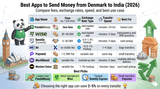
ZoltMoney, Wise, and Remitly are among the best apps to send money from Denmark to India. ZoltMoney offers zero-fee transfers at the real market rate, helping maximise the value of every transfer. Wise provides transparent pricing with the mid-market exchange rate and a clear fee structure. Remitly is a strong option for first-time users and those who need cash pickup in India. Here is how these apps compare with other popular options, including a few that may cost you more than expected.
Why Danish NRIs Often Pay More for India Transfers
Denmark is not part of the Eurozone, which means salaries are paid in Danish krone (DKK) rather than EUR. This creates an extra conversion step that many transfer services handle inefficiently, increasing the overall cost.
When you send money from Denmark to India through banks like Danske Bank, Nordea, or Jyske Bank, your DKK is first converted into another currency, such as EUR or USD, and then converted again into INR. Each step includes a markup, which quietly reduces the final amount received.
On top of that, banks charge wire fees that typically range from 50–100 DKK per transfer. When combined with exchange rate margins, the total cost can easily reach 2–5% of your transfer amount, making traditional bank transfers one of the most expensive options.
The better apps handle DKK directly or do a single-hop conversion at close to the mid-market rate. ZoltMoney’s stablecoin rails convert at real market rates with zero transfer fees through blockchain-based infrastructure. Wise also accepts DKK directly and converts at mid-market with a visible fee.
Best Apps to Send Money from Denmark to India
Choosing the right app to send money from Denmark to India can significantly impact how much your recipient actually receives. Fees, exchange rates, and transfer speed vary widely across providers, so comparing them side by side is essential.

ZoltMoney
ZoltMoney is one of the most cost-effective ways to send money from Denmark to India. It offers zero transfer fees and uses the real mid-market exchange rate, which helps maximise the amount your recipient receives. The platform runs on stablecoin infrastructure, avoiding SWIFT, double conversion, and intermediary bank deductions. This makes it especially valuable for regular monthly transfers where small savings add up over time.
Wise
Wise is a well-established and trusted option in Denmark. It accepts DKK directly, converts at the real mid-market rate, and shows all fees upfront. A typical 7,000 DKK transfer costs around 30–50 DKK. Transfers are usually completed within minutes to a few hours, making it a reliable choice for consistent and transparent transfers.
Remitly
Remitly is a strong option for users who want flexibility and fast delivery. It often offers attractive rates for first-time users, but regular transfers include a 0.4–1.4% markup in the exchange rate. It supports multiple delivery options, including bank transfers, UPI, and cash pickup, making it useful if your recipient prefers different ways to receive money.
Xe, Paysend, WorldRemit, and Western Union
Xe is best suited for large one-time transfers, offering rate alerts but including a markup in the exchange rate. Paysend is a good option for small transfers due to its flat fee structure, which keeps costs predictable. WorldRemit and Western Union are reliable for cash pickup, especially in smaller towns across India, but they typically come at a higher cost compared to digital bank transfer options.
Choosing the Right App Based on Your Transfer Needs
The best app to send money from Denmark to India depends on how often you transfer, the amount, and how your recipient prefers to receive the funds. Here is how to choose the right option based on your situation.
Regular monthly sender (5,000–15,000 DKK)
ZoltMoney is the most cost-effective option for recurring transfers due to its zero-fee structure and real exchange rate. Over time, this can significantly increase the amount your recipient receives. Wise is a strong alternative if you prefer a well-established platform with transparent fees. It is best to avoid bank wires, as double conversion and high fees reduce your transfer value.
One-off large transfer (50,000+ DKK)
For large transfers, it is important to compare rates on the day you send. ZoltMoney and Wise both offer competitive pricing, but small differences in fees can impact the final amount. For very high-value transfers, platforms like OFX may provide better rates through negotiated pricing.
Recipient needs cash, not a bank deposit.
If your recipient prefers cash pickup, Remitly and Western Union are the most practical options. They offer wide coverage across India and multiple collection points. However, they usually come at a higher cost compared to bank transfer options.
Sending small amounts (500–1,000 DKK)
Paysend is a simple and cost-effective choice for smaller transfers due to its flat fee structure. Percentage-based fees on small amounts can quickly add up, making other apps less efficient for low-value transfers.
For context on what actually moves currency exchange rates — including the DKK’s peg to the EUR — understanding these dynamics helps you time larger transfers.
Hidden Costs in DKK to INR Transfers
When you send money from Denmark to India, the real cost is often not obvious. Many apps and banks include hidden charges in the exchange process, which can reduce the amount your recipient receives without clearly showing it as a fee.
Double conversion increases your loss.
Some providers convert DKK to EUR and then to INR instead of converting directly from DKK to INR. Each step includes a markup, which increases the total cost. Platforms like ZoltMoney and Wise handle the conversion in a single step, helping you avoid unnecessary losses. If you are using a lesser-known app, always check how the conversion is processed.
The DKK EUR peg can be misleading.
Denmark maintains a fixed exchange relationship with the euro, but this does not mean transfer costs are the same. Many users assume DKK and EUR transfers are priced similarly, but apps often apply a wider spread on DKK due to lower trading volume. Always compare the actual DKK to INR rate offered before sending money.
Card funding can add extra fees.
Some apps only allow debit or credit card payments from Denmark, which can increase your cost by 0.5–2%. In contrast, platforms like Wise support free bank transfers, making them more cost-effective. Always review the available payment methods before confirming your transfer.
For a broader comparison of how ZoltMoney performs against Aspora for European corridor transfers, that analysis covers the cost dynamics.
Example of Sending 7,000 DKK from Denmark to India
To understand the real cost of transferring money, it helps to look at a practical example. Even small differences in fees and exchange rates can lead to a noticeable gap in how much your recipient receives.
Assuming a mid-market DKK to INR rate of approximately 12.73:
| App | Fee | Effective Rate | Recipient Gets (₹) |
|---|---|---|---|
| ZoltMoney | 0 DKK | 12.73 | ₹89,110 |
| Wise | 40 DKK | 12.73 | ₹88,601 |
| Remitly (regular) | 15 DKK | 12.55 | ₹87,598 |
| Danish bank wire | 75 DKK | 12.40 | ₹85,870 |
As the comparison shows, ZoltMoney delivers about ₹3,240 more than a traditional Danish bank wire on a single transfer.
If you send money regularly, this difference adds up quickly. Over 12 monthly transfers, that is nearly ₹38,880 more reaching your family instead of being lost to fees and exchange rate markups.
If you’re balancing remittances with the cost of living as an NRI in Europe, every saved krone counts.
FAQs About Sending Money from Denmark to India
What is the cheapest app to send money from Denmark to India?
ZoltMoney currently offers the lowest total cost for DKK to INR transfers, with zero fees and the real market exchange rate powered by stablecoin infrastructure. Wise is the next best option with transparent fees and mid-market rates.
Does Denmark use EUR or DKK for transfers?
Denmark uses the Danish krone (DKK). Although it is part of the EU, it is not part of the Eurozone. Most major apps like ZoltMoney, Wise, and Remitly support DKK. However, some services convert DKK to EUR first, which can increase costs, so it is important to check before sending.
How long does it take to send money from Denmark to India?
ZoltMoney and Wise typically complete transfers within minutes to 24 hours. Remitly Express is faster for urgent transfers but may offer a weaker exchange rate. Remitly Economy can take up to 5 days. Traditional bank transfers usually take 2 to 5 business days and are more expensive.
Are there limits on sending money from Denmark to India?
There is no fixed limit on personal remittances from Denmark. Wise supports transfers up to the equivalent of about €1,000,000, while Remitly usually caps transfers at around €100,000. On the Indian side, there is no limit on inward remittances under RBI rules.
Do I need CPR documentation to send money from Denmark to India?
Most apps require a valid government-issued ID, such as a passport or Danish residence permit. You will also need your recipient’s Indian bank account number and IFSC code. For larger transfers, additional verification such as proof of address or source of funds may be required.
Is there any tax when sending money from Denmark to India?
Sending your own income from Denmark to India is not a taxable event. Denmark has a tax treaty with India to prevent double taxation. However, large gifts may be subject to the Danish gift tax. In India, gifts from non-relatives above ₹50,000 may be taxable for the recipient. It is best to consult a tax advisor for specific cases.
This blog is for informational purposes only and does not constitute legal, financial, or tax advice. Regulations, fees, and exchange rates change frequently. Consult a qualified CA or tax advisor for guidance specific to your situation.
Related Articles


Send Money to India
Send Money to Vietnam
Send Money to Philippines
Convert to Indian Rupee
Convert to Vietnamese Dong
Convert to Philippine Peso
Currencies

Send money to India, Vietnam, and the Philippines at real Zolt FX rates with zero hidden fees.
Company
Follow Us



Download App


GetPandaMoney Inc. is a financial technology company, not a bank. Our product and services are offered in partnership with regulated and licensed financial institutions in each jurisdiction that we operate in. Client(s) deal directly with our regulated partners through the platform provided by ZoltMoney.
For any queries or grievances, please write to us at compliance@zoltmoney.com
131 Continental Dr Suite 305 Newark, DE, 19713 US
©2026 ZoltMoney. All Rights Reserved.
Send Money to India
Send Money to Vietnam
Send Money to Philippines
Convert to Indian Rupee
Convert to Vietnamese Dong
Convert to Philippine Peso
Currencies
Send money to India and Vietnam at real Zolt FX rates with zero hidden fees.
Company
Follow Us
Download App
GetPandaMoney Inc. is a financial technology company, not a bank. Our product and services are offered in partnership with regulated and licensed financial institutions in each jurisdiction that we operate in. Client(s) deal directly with our regulated partners through the platform provided by ZoltMoney.
For any queries or grievances, please write to us at
compliance@zoltmoney.com
131 Continental Dr Suite 305 Newark, DE, 19713 US
©2026 ZoltMoney. All Rights Reserved.